
Cognitive Conditions
Cognitive impairment can have many contributing causes which may be temporary or chronic. For older people, some common syndromes are mild cognitive impairment, delirium, depression and dementia.
Lifestyle factors for healthy brains
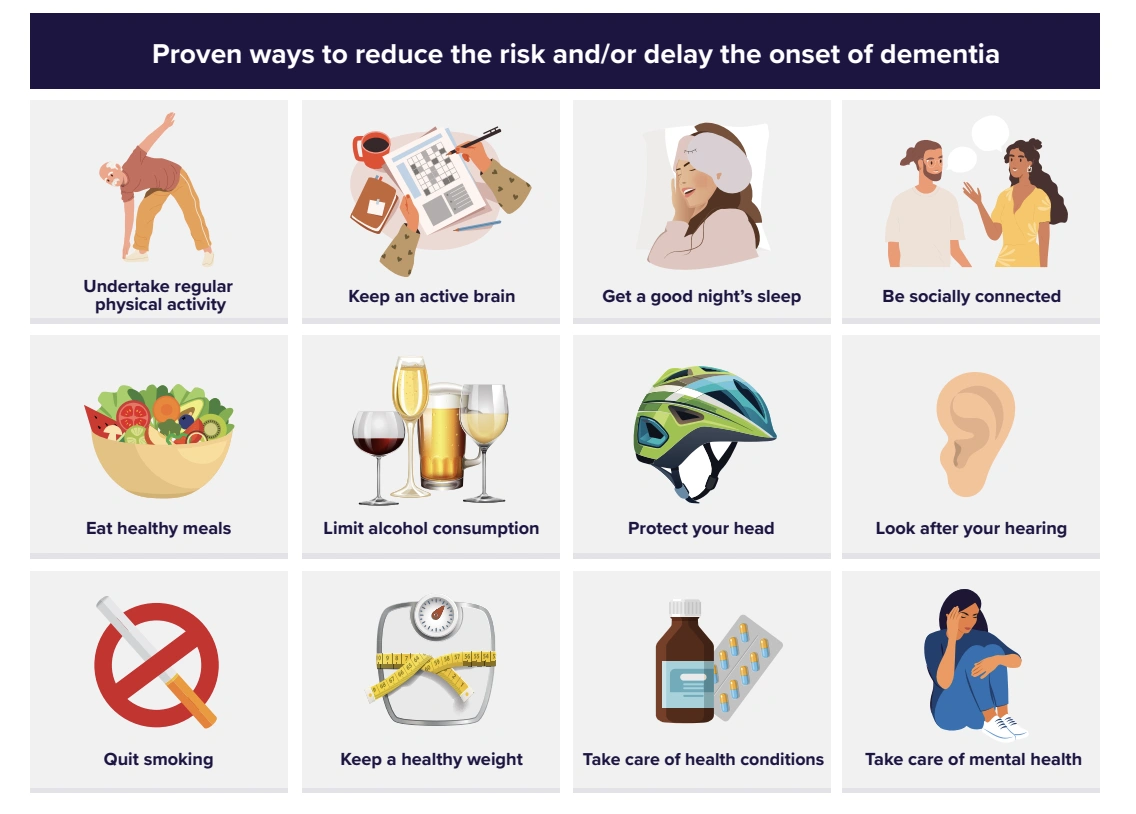
Dementia is on the rise in Australia. Fortunately, there is a lot we can do to prevent it.
These are 12 evidence-proven ways that you can prevent or delay the progression of dementia. Many people find it helpful to choose one achievable and measurable short-term goal and one long-term goal.
Using a health professional for guidance helps you get started with reasonable targets and strategies, and helps keep you on track.
Delaying the onset of dementia is not only beneficial for your life and your family's lives, but it also results in big cost savings to the healthcare system.
Reference: Dementia in Australia Report, Australian Institute of Health and Welfare (AIHW), 2023
Mild Cognitive Impairment
People with mild cognitive impairment (MCI) experience a noticeable decrease in memory, language, or thinking skills, but remain independent and capable of performing everyday tasks.
Some people worsen over time and some improve.
Statistically, about 50% of people with MCI develop dementia within five years. This is
Early detection is better, as lifestyle changes and medical treatments are much more effective when done early before accumulation of damage in the brain. Some people with MCI even improve to normal cognition when their underlying causes are addressed.
The treatment of MCI is tailored to the contributing factors identified in your appointment. This may include treating medical or mental health issues and lifestyle changes (sleep, nutrition, exercise).
High-quality research trials helps everyone understand treatments for MCI better.
If you wish, you may choose to participate in clinical trials for new emerging therapies for MCI and early Alzheimer's Disease at KaRa Minds.
Read more about MCI here at Dementia Australia.
https://www.dementia.org.au/brain-health/mild-cognitive-impairment-mci
Delirium
Delirium is an acute, fluctuating change in attention and thinking.
Symptoms can include abnormal thinking, being confused, hallucinations, drowsiness or hyperactivity. Symptoms often fluctuate. How long it lasts depends on how major the trigger was (hours to days to weeks).
People with dementia are more prone to developing delirium.
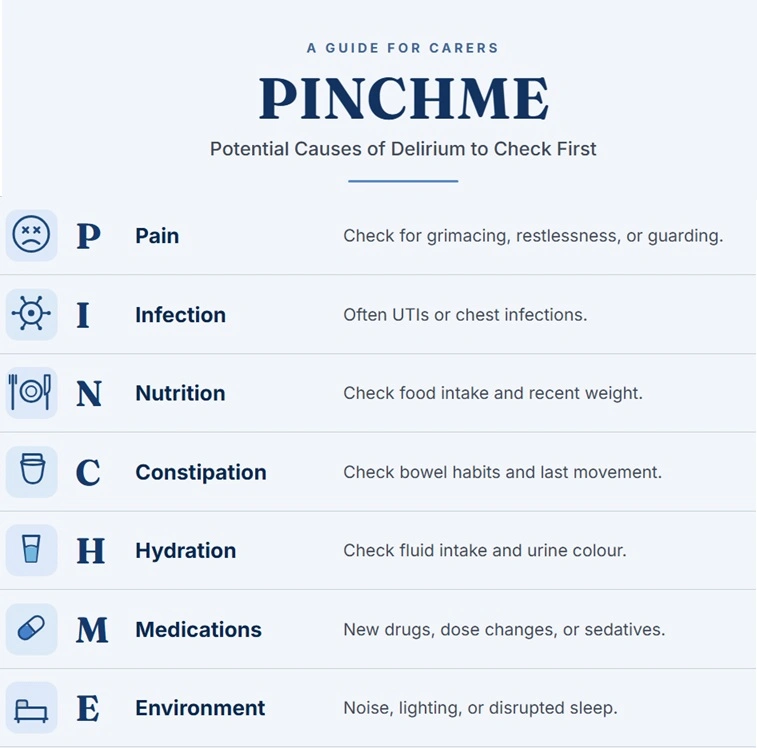
Treating the underlying cause often improves delirium. It can be helpful to screen for potential "PINCHME" causes e.g. pain, infection, nutrition deficiency, constipation/diarrhoea, hydration, medication effects and confusing environments.
Read more about delirium on the Dementia Australia website. You can also call them for additional support.
https://www.dementia.org.au/living-dementia/mood-and-behaviour-changes/delirium
Dementia
Dementia is an umbrella term for neurodegenerative conditions causing progressive cognitive decline. Some subtypes of dementia are Alzheimer’s, Vascular and Mixed Dementia. Others include Parkinson’s, Lewy Body and Frontotemporal Dementia.
Cognition problems present in different ways for different people, but the common factor is that people benefit from support in their daily activities.
Dementia can affect:
Memory
Language and communication skills
Visuospatial skills
Executive function e.g. planning
Social behaviour
There are effective strategies to make everyday activities easier and safer. Many people with dementia live full social lives and live in their own homes.
With support, people with dementia enjoy their hobbies, and have meaningful relationships. Assistance for daily functioning could include reminders, help from carers, allied health or nurses. Additional care can come from MyAgedCare or privately funded.
Read more about different types of dementia:
https://www.dementia.org.au/about-dementia/causes-and-types-dementia
Medications for Alzheimer's Dementia
1. Acetylcholinesterase Inhibitors
Acetylcholine is a neurotransmitter in the brain that allows nerve cells to talk to each other. People with Alzheimer’s dementia have less acetylcholine in the brain due to nerve cell damage.
Acetylcholinesterase inhibitors increase this neurotransmitter in the brain called acetylcholine to boost memory for longer temporarily. Between 40-70% of people find some benefit. The medications are generally more effective in mild-moderate Alzheimer’s dementia and less effective when dementia is severe.
There are 3 acetylcholinesterase medications with similar efficacy:
Donepezil
Galantamine
Rivastigmine capsule or patch
Clinically meaningful response may include:
Quality of life including level of independence and happiness
Cognitive function: memory, recognition and interest in environment
Behavioural symptoms
Side effects affect around 1 in 10 people and can include nausea, vomiting or diarrhoea which often gets better after a short time. A rare but potentially serious side effect can be a slow heart rate.
Memantine
People with Alzheimer’s disease can have too much of a neurotransmitter called glutamate which can damage nerve cells. Memantine protects the nerve cells by blocking the glutamate NMDA receptor.
Memantine can be added to an acetylcholinesterase inhibitor in moderate Alzheimer’s disease to have a further small improvement in cognition.
Depression
Some people with depression experience difficulty concentrating, and this can affect their memory. Fortunately, depression is a treatable condition and when it improves, the ability to think improves.
Phone and digital mental health services such as Lifeline and Beyond Blue provide access to counsellors or crisis support workers who are trained to provide short-term counselling support. You can call:
NSW Health Mental Health Line
1800 011 511
The Mental Health Line is a 24-hour telephone service. You can call any time day or night. A trained counsellor can help and refer you to services and programs.
https://www.health.nsw.gov.au/mentalhealth/pages/mental-health-line.aspx
Aged Care Support
There are many options for aged care supports in Australia and your geriatrician can provide guidance for your situation. Some aged care support options include:
Education for carers improves the quality of life for people with dementia. A key principle in the compassionate dementia care is actively including the person and their loved ones in decisions that impact their daily lives.
Many people with dementia can live safely at home with good social supports. Some people with dementia may benefit from support in a residential aged care home. If you are interested in taking a free online course, check out Understanding Dementia or Preventing Dementia (https://mooc.utas.edu.au/).
Organisations that directly support carers include Dementia Australia, Dementia Support Australia and Carer Gateway.
There are several private care providers that you can hire for additional help. This may be beneficial for some people who choose to have additional support to their MyAgedCare services or those who are waiting for or not yet eligible for services. Hourly costs can vary for the services provided, and the time of day. Some providers have live-in carer options if this suits your situation.
The Commonwealth Home Support Program helps you access entry-level support services to life independently and safely at home.
You can apply by contacting MyAgedCare. If you’re approved you could get services such as gardening, shopping assistance, meal delivery, personal care, nursing care, allied health or respite.
Support At Home Classifications 1 to 8 (previously called Home Care Packages Level 1 to 4) provide you with home care services subsidised by the Australian Government.
Support At Home may include:
o Clinical supports e.g. nursing care, occupational therapy and podiatry
o Independence support e.g. help with showering, taking medications, transport and respite care
o Everyday living e.g. cleaning, gardening, shopping and meal preparation.
Based on your individual needs, you may be approved for assistive technology and home modifications.
Moving home into aged care can be helpful for older people and their families if there is a need for a more supported environment. Aged care homes provide accommodation, daily living services (meals, cleaning), nursing care and personal care. In addition, they provide opportunities for social and physical activities for residents.
Staying at an Aged Care Home can be temporary (e.g. respite or the transition care program) or long-term.
People may personalise their rooms with personal items and make it their home. Families and friends can visit and sometimes take residents out for outings.
Aged care can relieve stressors that older people and their carers face by providing a lot of services in one place.
Doctors such as GPs and Geriatricians can also provide medical care by visiting aged care homes. Dr Giselle Bennett provides aged care home visits.
How much it costs to live in Aged Care depends on the place, your income and assets assessment and any optional goods and services. You can get an estimate on the MyAgedCare.gov.au website.